Case study · Publix
Publix’s journey to stand-alone microsites
As design lead, I set the design direction and led the team behind a component system that lets Publix launch campaign microsites quickly, with every site a confident, faithful expression of the Publix brand.
01
The problem
Every new microsite started from scratch, which made launches slow and the brand hard to keep consistent.
Context
Publix is a much-loved grocery chain in the south-east of the U.S., and its marketing team runs a lot of campaigns. Many of them need their own microsite, and each one has to launch quickly and carry the Publix brand with real craft.
Without a shared system, every new site was designed and built from scratch. That made launches slow, and it meant the brand was interpreted a little differently each time.
The question was: how do we give Publix a system that launches new sites quickly, keeps the brand consistent, and still leaves room for each campaign to feel like its own thing?
The challenge
Two design teams had to work as one: Publix’s in-house team and ours at Fueled. Without a shared language, a shared quality bar and clear decision-making, the work could easily lose its purpose and never be adopted across the business.
The design itself had to stretch too. This wasn’t one microsite. It was a visual system flexible enough for very different campaigns, content types and brand partnerships, while staying true to the Publix brand.
02
The solution
As design lead, I set the direction, managed the Fueled design team and brought Publix’s own designers into the process.
My role
I was the design lead on the project. That meant owning the design direction, managing the design team at Fueled, and making sure Publix’s in-house design team was part of the work rather than just signing it off.
I set the standard for what good looked like, decided where the team’s time went, and reviewed the work as it came together. I also owned the product scope, so we designed the right components in the right order, and kept design, engineering and the Publix pointing the same way.
My approach
Four steps to get two teams designing as one, and a system that keeps up with marketing.
Align the teams
One way of working and one quality bar for both design teams.
Shape the product
An audit of existing sites became a phased component roadmap.
Design the system
Flexible visual components that express the Publix brand in any campaign.
Enable the business
Clear guidance so marketing can build on-brand pages themselves.
One design team, not two
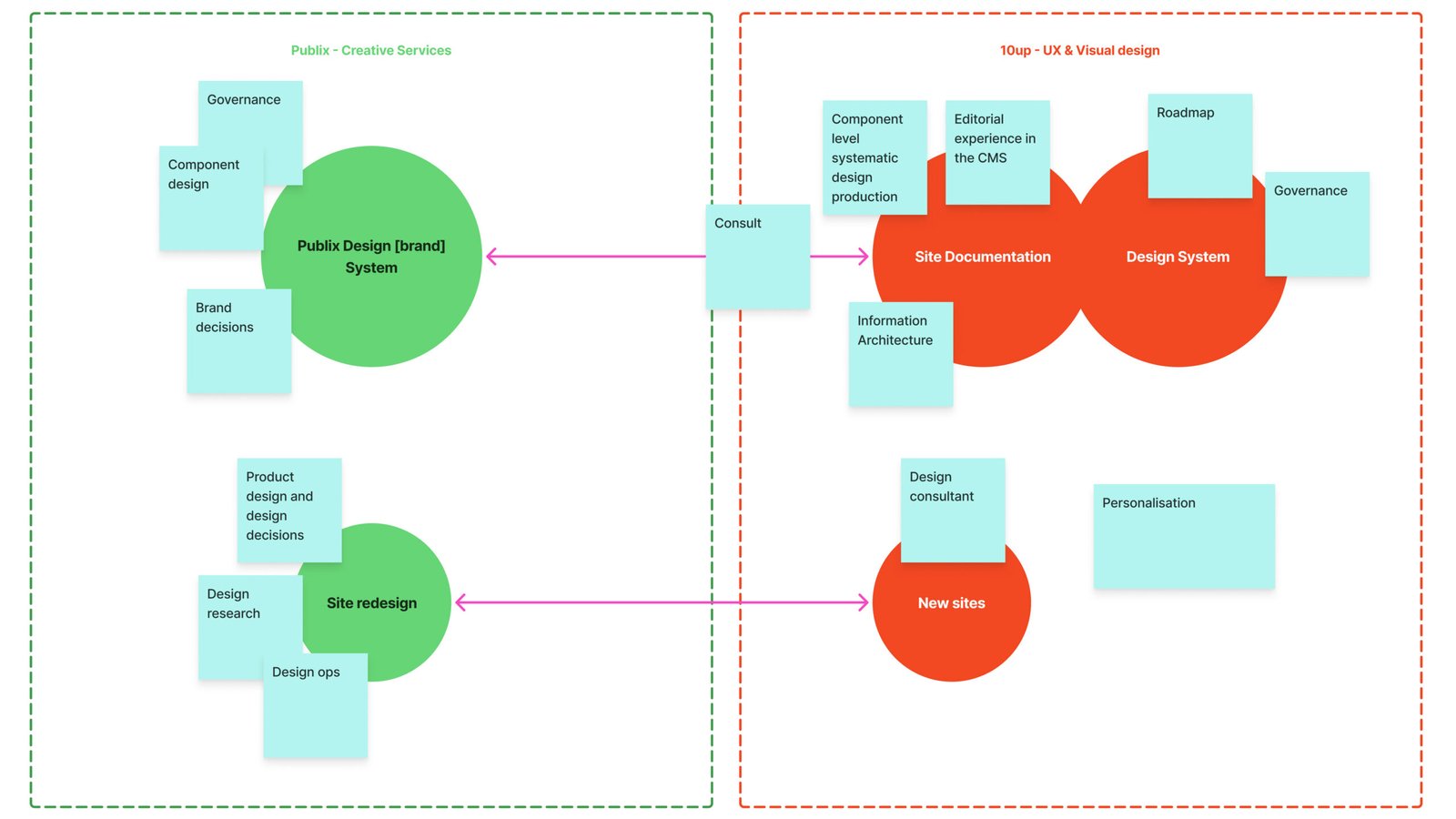
I looped Publix’s design team in from the very start. We ran a series of workshops together to agree goals, success measures, roles and rituals across both teams.
The most useful part was writing down how we work together: who reviews, who approves, and what a finished design actually looks like. With both teams holding the same quality bar, I could lead one joined-up design effort instead of two teams working side by side.
Shaping the product
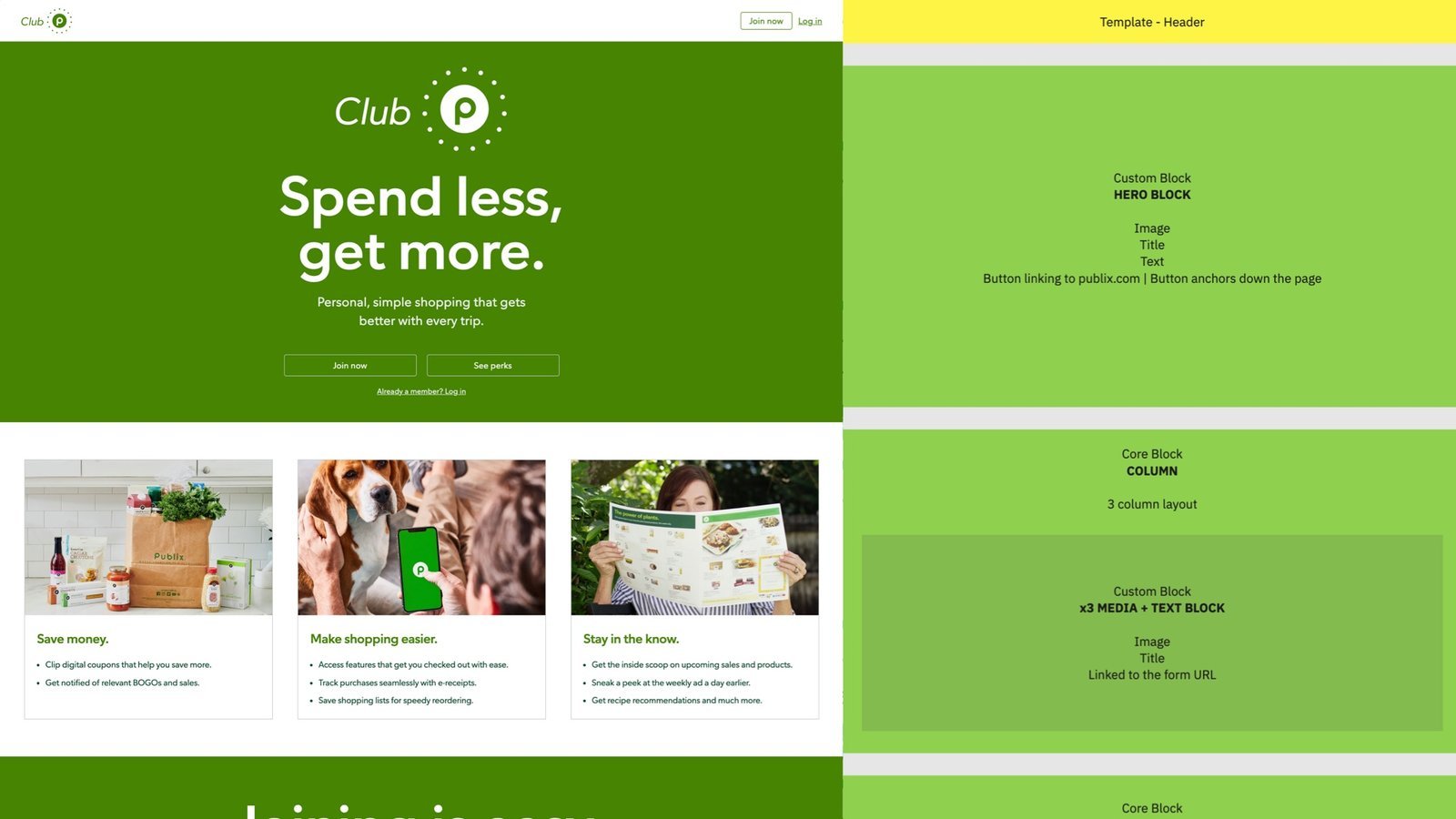
Before designing anything new, the visual designer and I audited Publix’s existing microsites and pulled out every pattern that kept coming back.
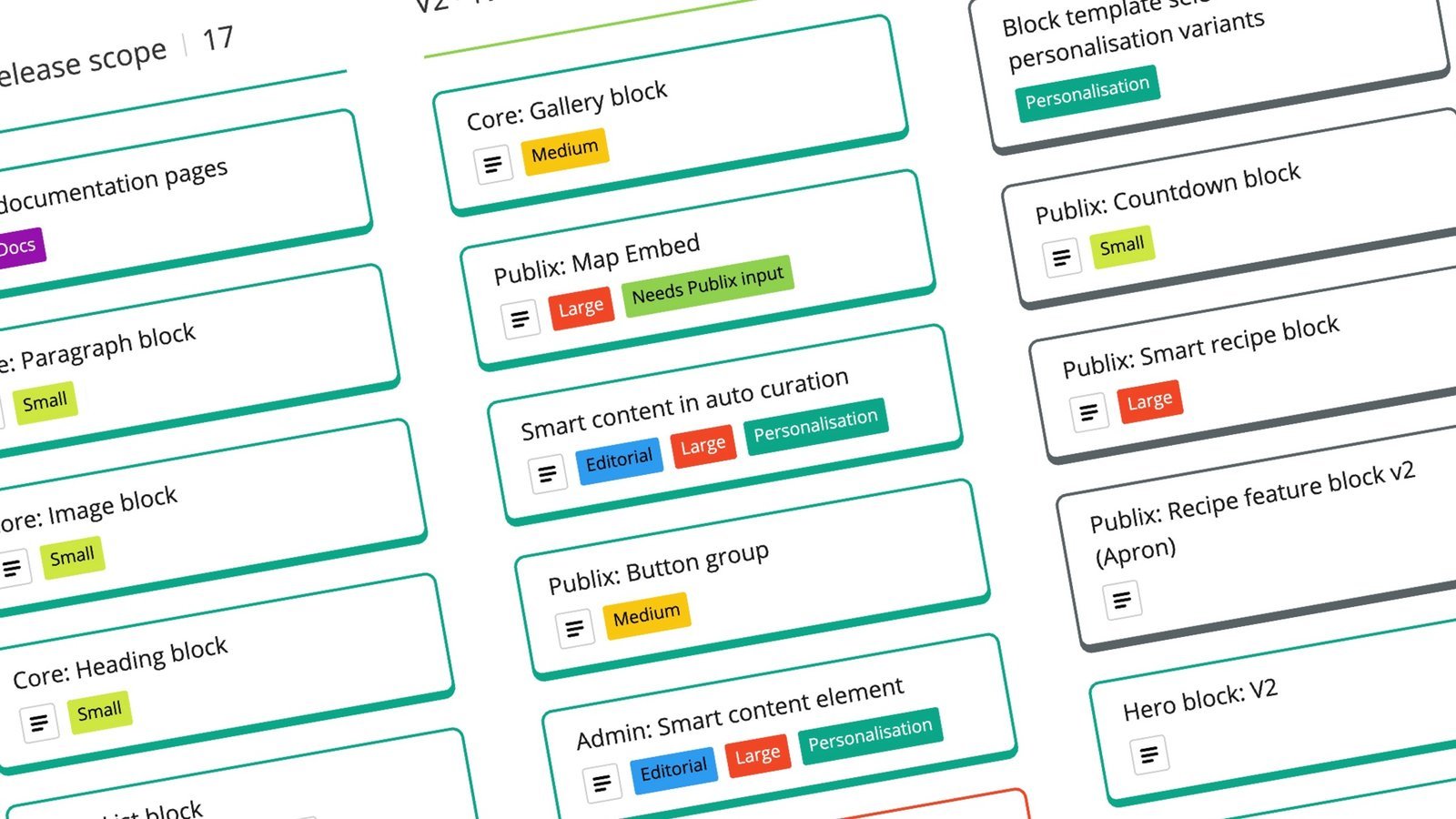
I turned that into a product roadmap for the system, with components grouped into phase one, phase two and future. Each one had a clear purpose and set of rules. We also designed for the awkward marketing cases up front, like co-branded headers with more than one logo and delivery calls to action, so they wouldn’t derail the build later.
Designing the system
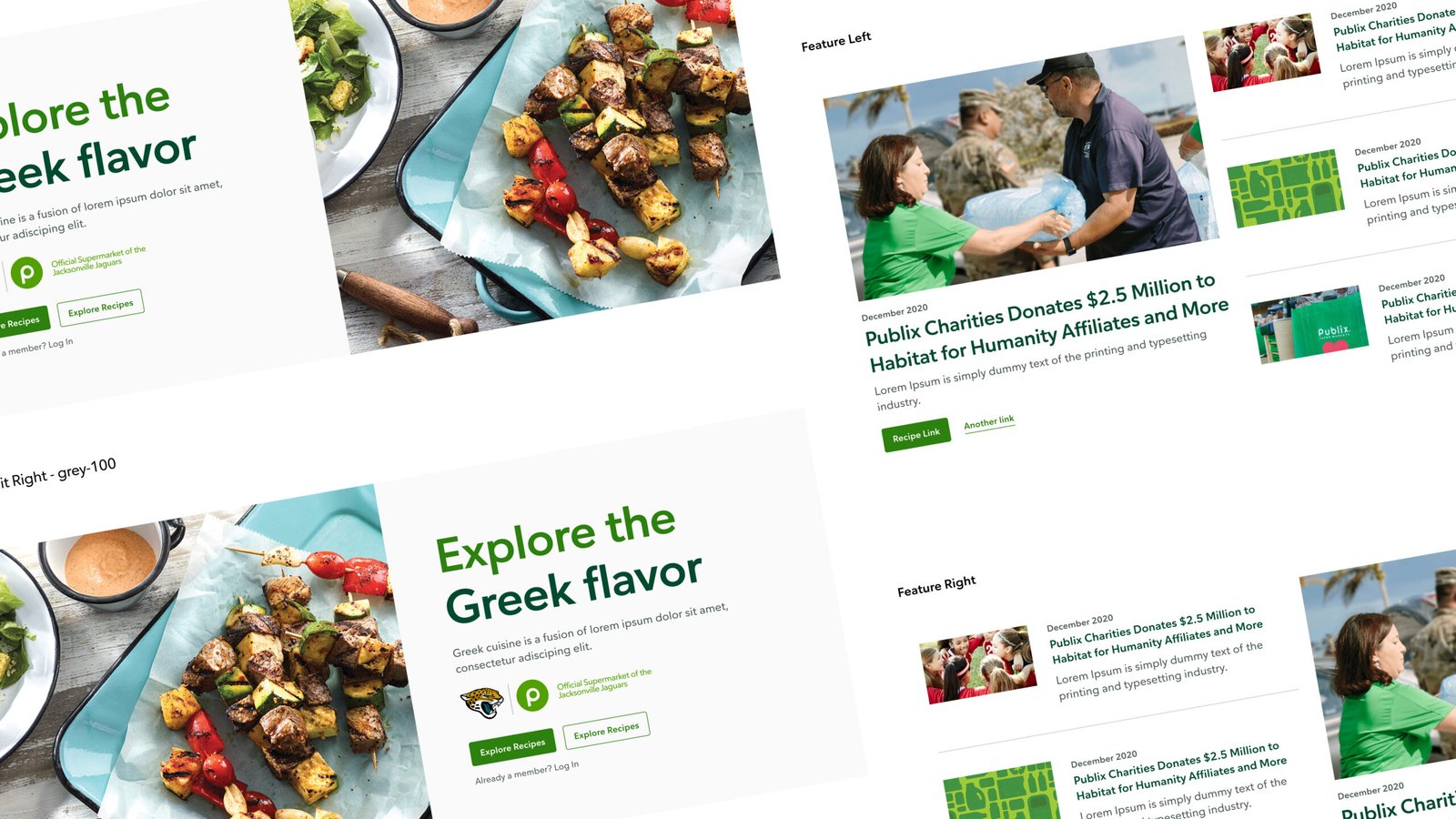
The visual design had to do two jobs at once. Every component needed to be a precise expression of the Publix brand, and it needed enough range to carry very different campaigns, from member perks to sports partnerships.
I shaped the team around that. Our visual designer focused on the core components and their look and feel, while I took on the complex pieces myself: components with lots of connected variants, and how editors would build pages with them. My component maps showed exactly how each block works and what content it needs, and I reviewed the visual work against the direction we’d agreed with Publix’s team.
Launch and growth
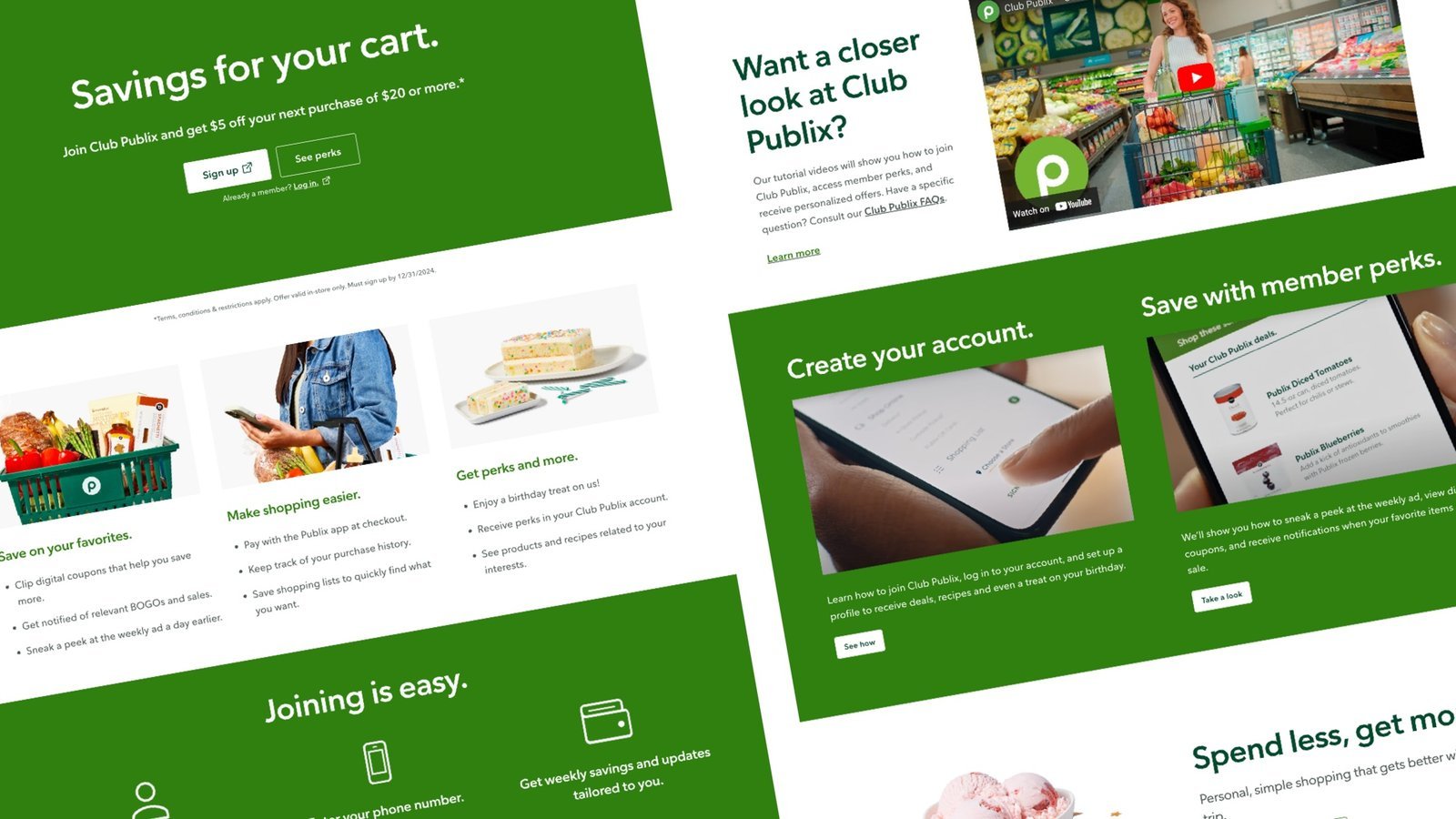
We launched first with Club Publix, a smaller site that still used a wide range of components. It proved the approach: reuse, recombine and ship quickly, without compromising the Publix brand.
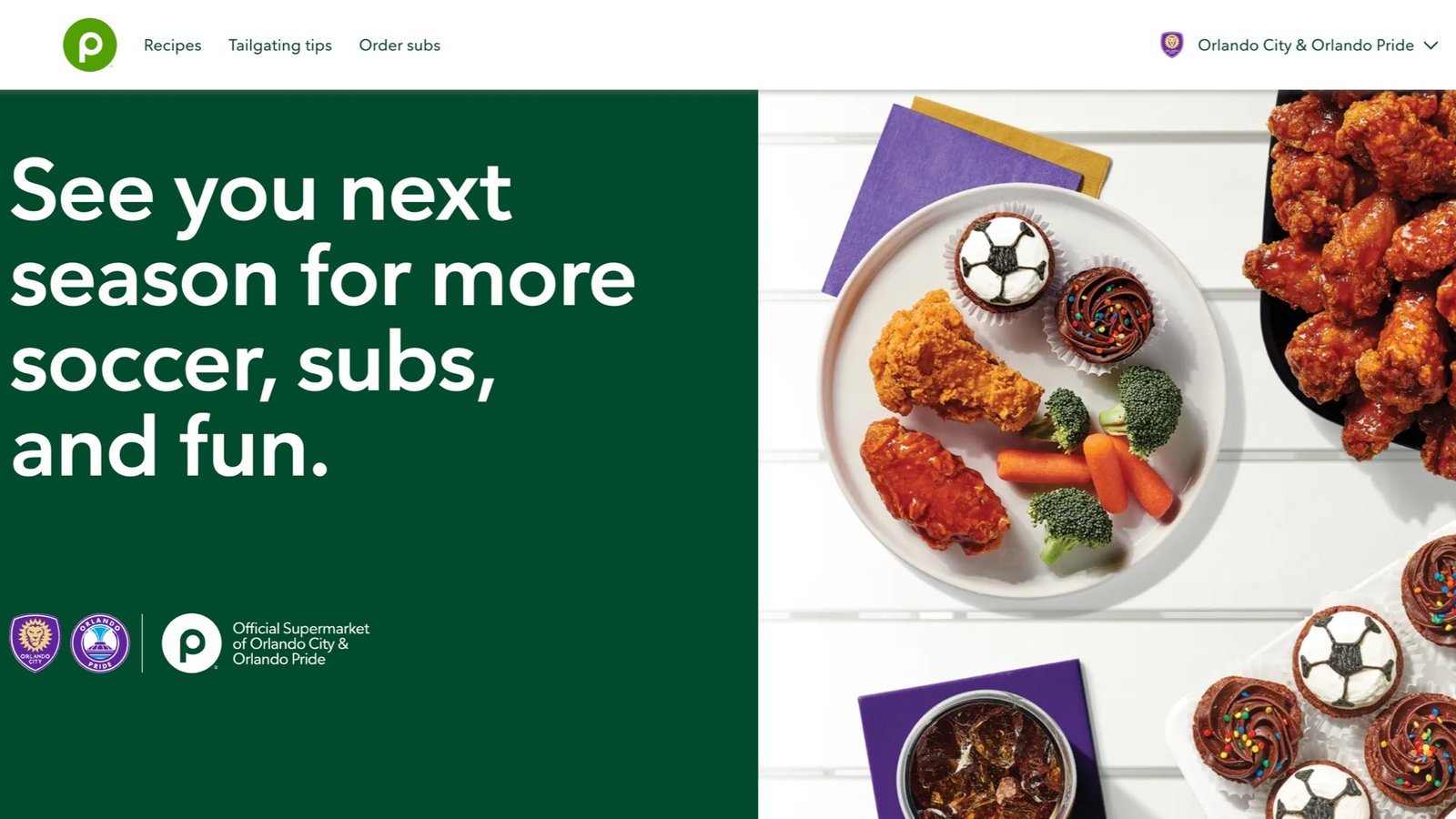
As more sites rolled out, I worked with Publix’s team to grow the system where it mattered most. We added recipe features, new marketing message styles and a sports team picker for the Tailgating site, all designed to sit naturally alongside the existing components.
The microsites
Live sites built from the same component system.
Protecting the brand at scale
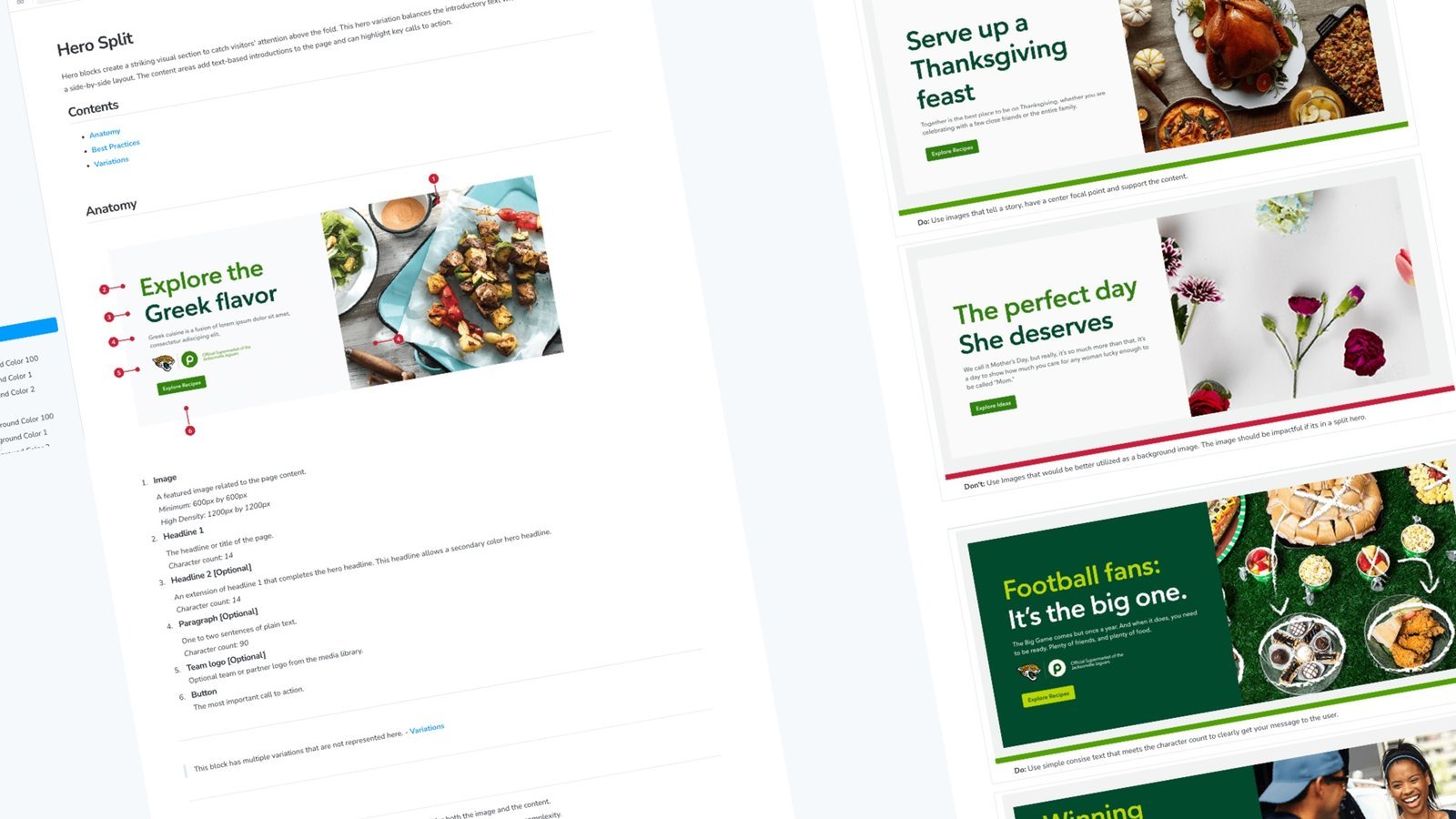
A design system only works if people outside the design team can use it well. I led the documentation in Storybook, covering every component and variant: what it’s for, how it’s built, what content it needs, and how to use it well.
Marketing and content teams can now build new pages themselves and keep them true to the Publix brand, without needing a designer for every launch.
03
The result
Publix now launches microsites that stay true to its brand, from one shared system, designed and run by one joined-up design team.
Impact
The two design teams now work as one, with clear roles, reviews and decision points. That took a lot of friction out of the work and kept delivery moving.
The component system handles new campaigns and content types without a redesign from scratch, and every site stays true to the Publix brand. With the documentation in Storybook, marketing and content teams build pages on their own while keeping the same quality across every launch.
Scaling isn’t just a design problem. It’s an alignment problem.
What I learned
Scaling design is as much about people as it is about pixels. The system only worked because both teams agreed how good the work had to be, and who decides.
If I did it again, I’d do the same three things early: agree a shared way of working, write a product-level scope, and back it with clear design guidance. Get those right, and both the system and the partnership get stronger over time.
See it live (U.S. only): Tailgating, Club Publix, Black Community and Hello Publix.