Case study · The Nobel Prize
Designing for discovery and celebration
Leading a single design system for the Nobel Prize, from the global moment of announcement week to the Nobel Prize Museum and cultural events in Stockholm.
01
The problem
The Nobel Prize needed its websites to feel like one organisation, even though each served very different people and moments.
Context
The Nobel Prize is one of the most recognised brands in the world, across science, literature and peace. Its websites have to live up to that. They need to feel as significant as the prizes themselves, while still being an easy way in for anyone curious about the laureates, upcoming events and the wider cultural work of the Nobel organisation.
The question was: how do we celebrate the laureates, and still give the museum and cultural events what they need, all from one system?
The challenge
Each site had a very different job. The main site has to cope with announcement week, when the whole world is watching. The museum site serves people deciding what to see and when to come. And the editorial team wanted to tell richer stories without waiting on a designer for every page.
Designing each of these on its own would have pulled the brand in different directions. Everything had to hold together as one Nobel Prize, wherever people met it.
02
The solution
I set the design direction in Sweden, then shaped a shared set of components that the main site, the museum and future projects could all build on.
My role
I was responsible for the design system across the Nobel Prize’s websites. With my team, I planned and ran a workshop in Sweden that set the direction for upcoming projects on the main site and the Nobel Prize Museum site.
From there, I shaped a visual language that could work on every site, set the rules for how its components behave, and led the editors through putting it to use.
My approach
Four very different moments, one shared foundation.
Announcement week
Designed the main site for its busiest, most visible week.
The museum
Adapted the components for people planning a visit.
Editorial blocks
Built custom blocks and showed editors how to use them.
Cultural events
Explored how the design could reach events in Stockholm.
Announcement week
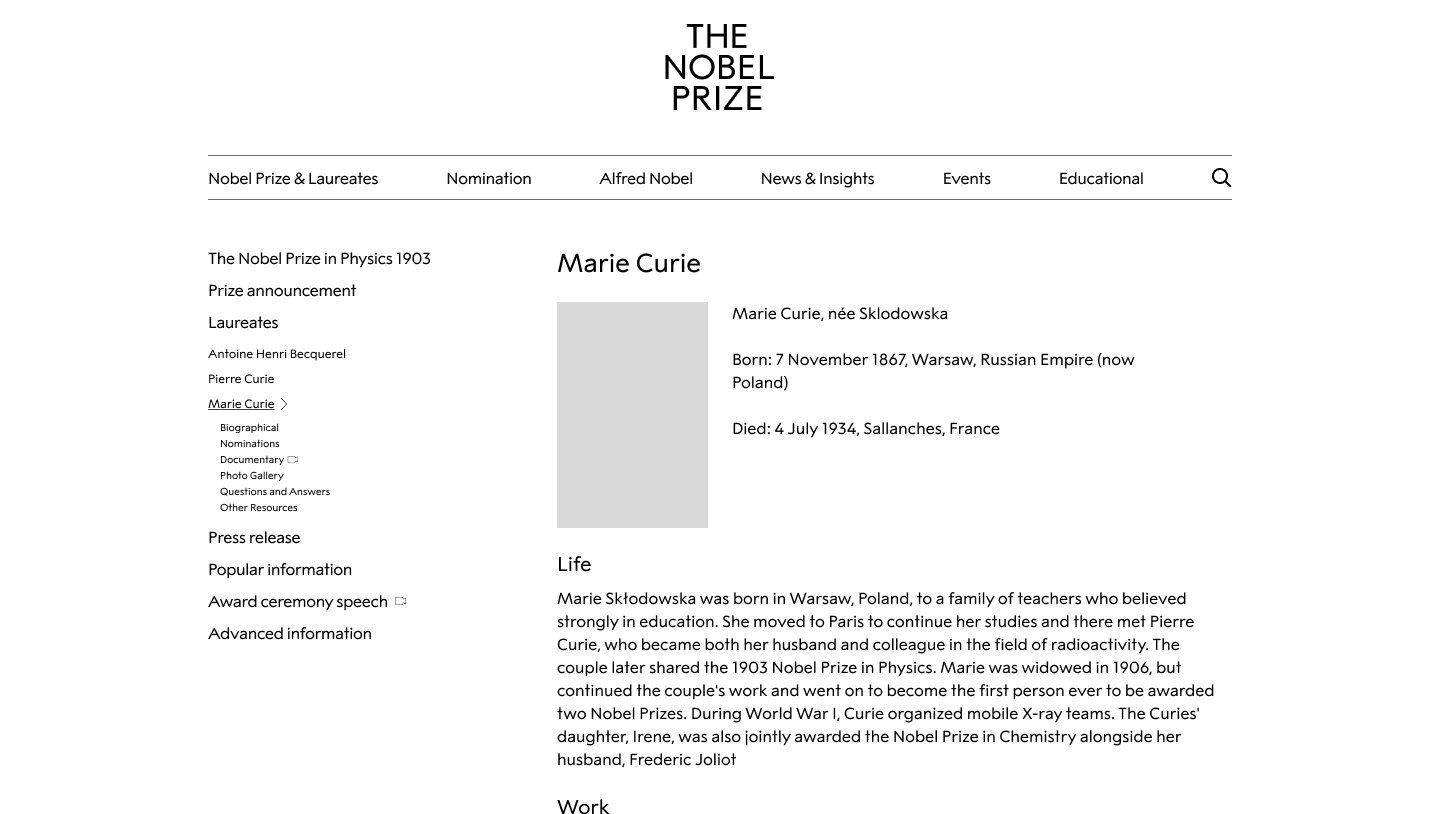
We started with announcement week, the moment the Nobel Prize gets the most attention. We designed new ways into the lives and achievements of the laureates, and made prize content much easier to find and explore.
The visual direction is deliberately restrained: clean typography, generous space and a calm, clear structure. That lets the laureates and their stories lead, and gives the work the weight the prizes deserve.
The Nobel Prize Museum
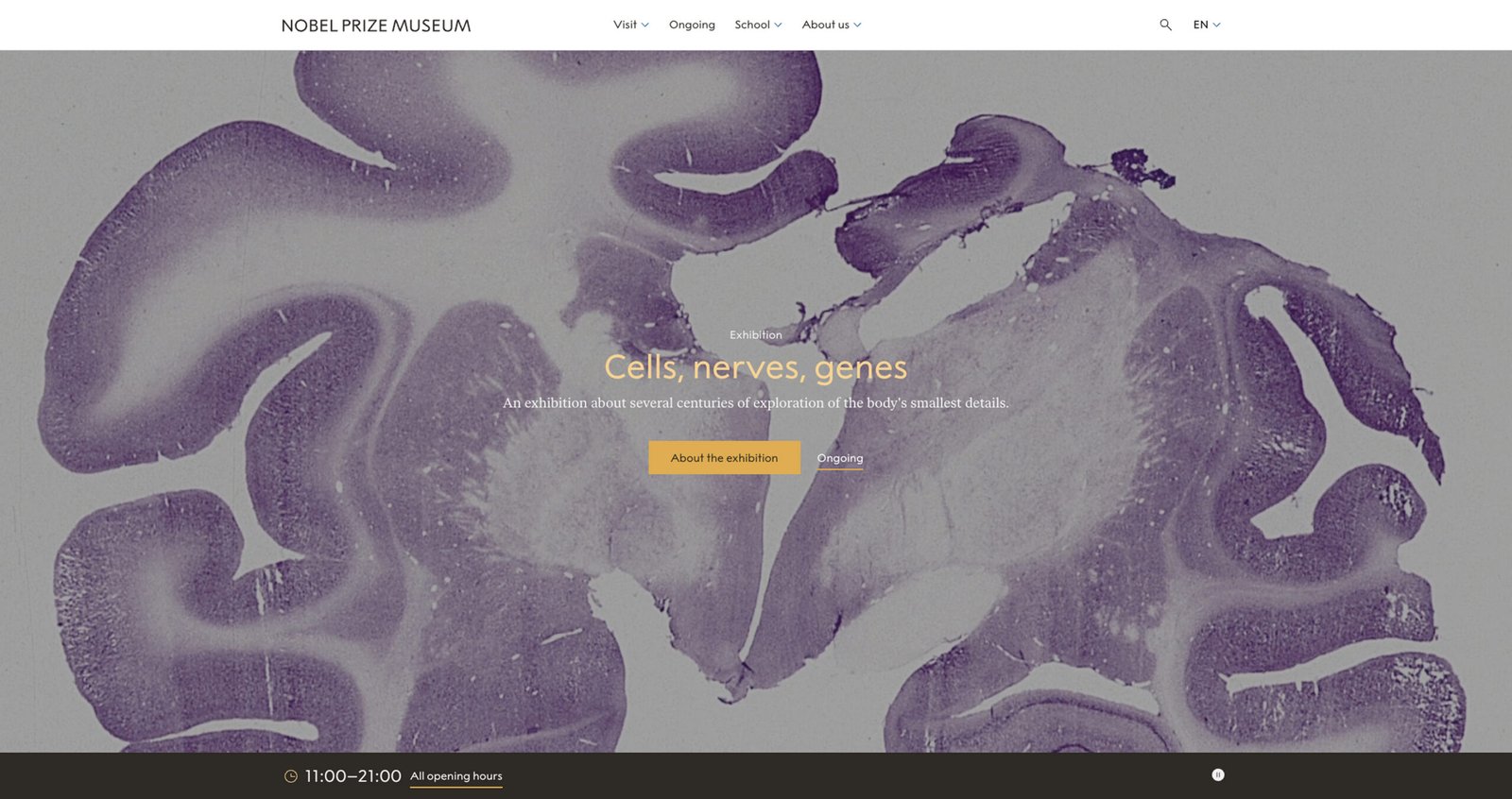
Next, I extended the system to the Nobel Prize Museum site. Its audience is different: people looking for exhibitions, events and learning. Here the same components had to feel welcoming, with clarity and accessibility first, so visitors can quickly see what’s on.
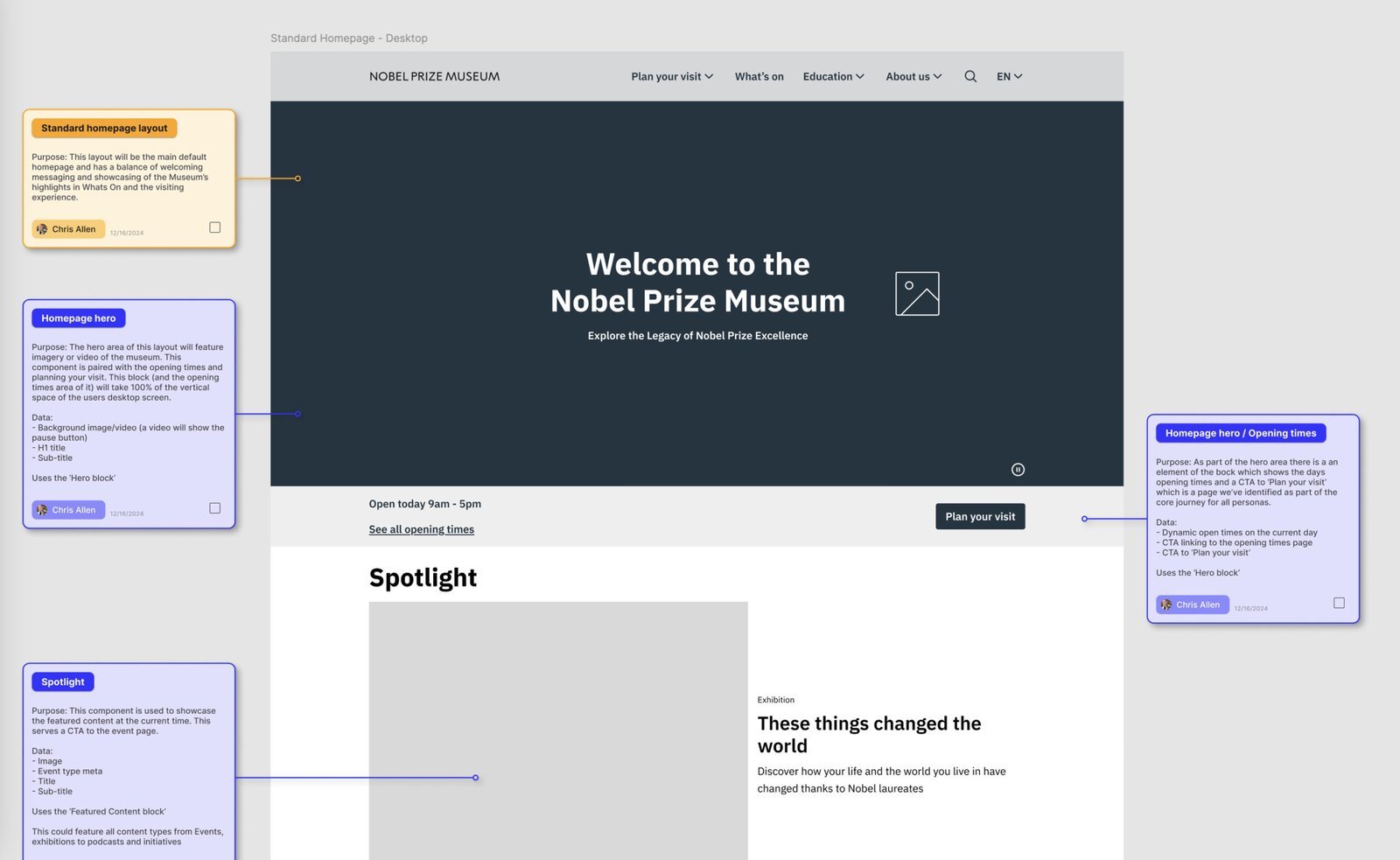
I defined the purpose of every component on the museum homepage, from the hero and today’s opening times to the featured exhibitions, so everyone working on the site knew the job each block had to do.
Designing for the editors
A design system is only as good as what people make with it. I designed a set of custom WordPress blocks that editors can mix freely, so articles can go well beyond the standard templates without breaking the system.
To get the team using them, I ran hands-on workshops. We split into groups and tried out different layouts, and the playful format showed editors what was possible.
Cultural events
In parallel, we ran a discovery phase for stand-alone cultural events in Stockholm, such as the Stockholm Lights Festival, looking at how the Nobel Prize brand could carry beyond its main websites.
03
The result
Every Nobel Prize site now draws on the same system, and each one still fits its own audience.
Impact
The system now works across very different contexts: the high-profile announcement week, year-round stories about the laureates, museum exhibitions and cultural events. Each one clearly belongs to the Nobel Prize.
The custom blocks gave the editors real creative freedom. They build fresh layouts on their own now, and the workshops gave them the skills to tell stories in more compelling ways.
Design patterns should serve both the audience and the teams behind the scenes.
What I learned
Consistency and creativity don’t have to pull against each other. Visitors get a site that feels the same wherever they land, and editors still have room to make each story their own.
Bringing the editors along mattered as much as designing the system. It only stays strong if the people who use it understand it and enjoy working with it.
See it live: The Nobel Prize, Nobel Prize press releases and the Nobel Prize Museum.