Case study · Google Site Kit
Rethinking onboarding through user research
An end-to-end research study that gave the Site Kit team clear evidence for a simpler, step-by-step setup flow.
01
The problem
New users needed an easier way to set up Site Kit and connect their Google services.
Context
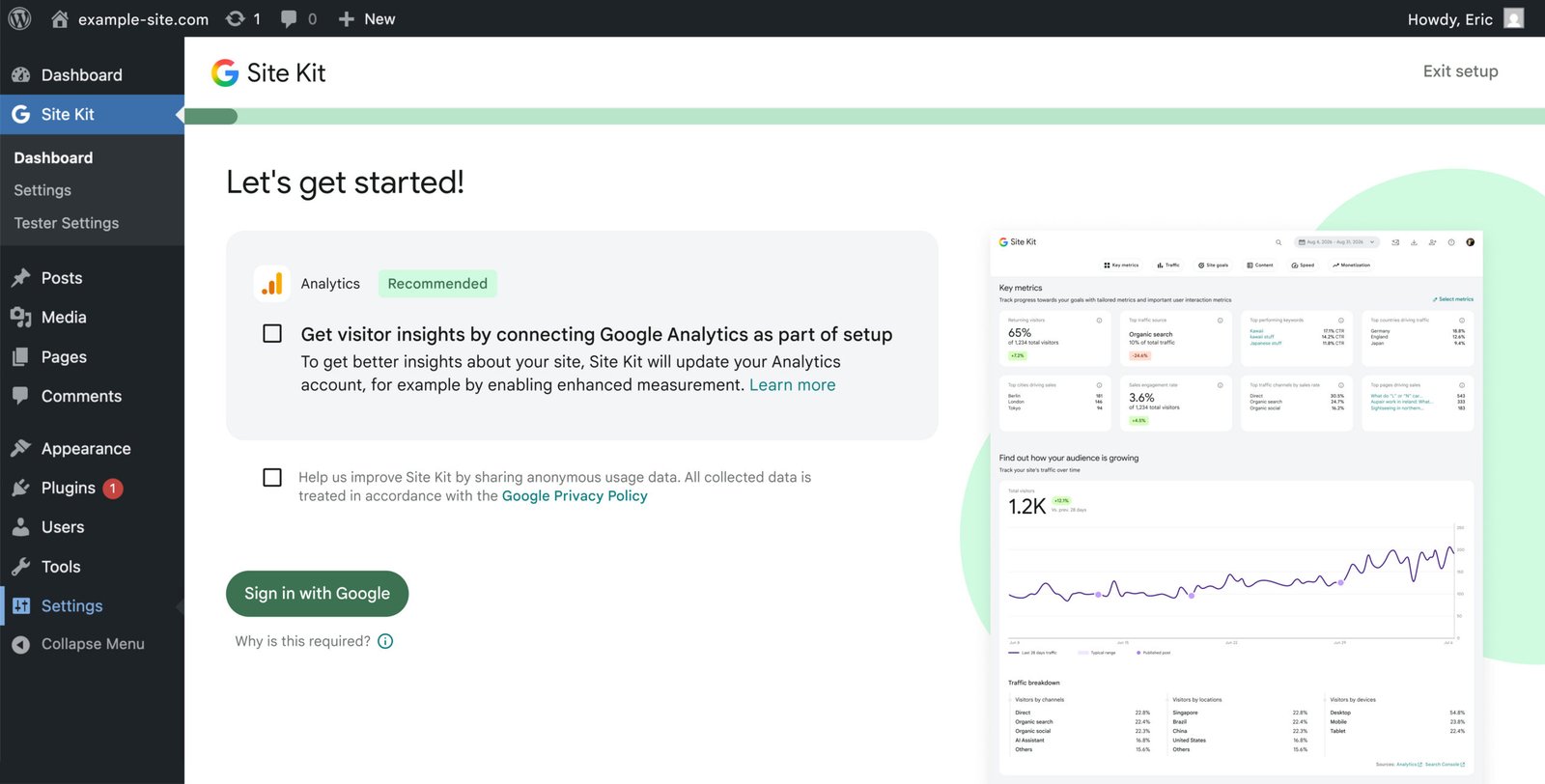
Google Site Kit is a WordPress plugin that connects websites to Google’s tools for performance, analytics and search.
The Site Kit team wanted to simplify onboarding. They had to decide how to structure the new installation flow, and they wanted user evidence before they built it.
How might we design an onboarding flow that motivates users to connect more Google services, without overwhelming or frustrating them?
02
The solution
I led a research study that put two onboarding flows in front of real WordPress users.
My role
I led the research study from start to finish: planning, recruiting, interviewing and synthesising the findings.
My goal was to give the product team clear evidence for one decision: how to structure Site Kit’s new installation flow.
My approach
Four steps from fresh participants to a clear product decision.
Recruit
Found WordPress users who had never used Site Kit before.
Interview
Learned how they monitor their sites and set up new plugins.
Test two flows
Compared a badge-based flow with a step-by-step flow.
Synthesise
Turned the sessions into clear themes and a recommendation.
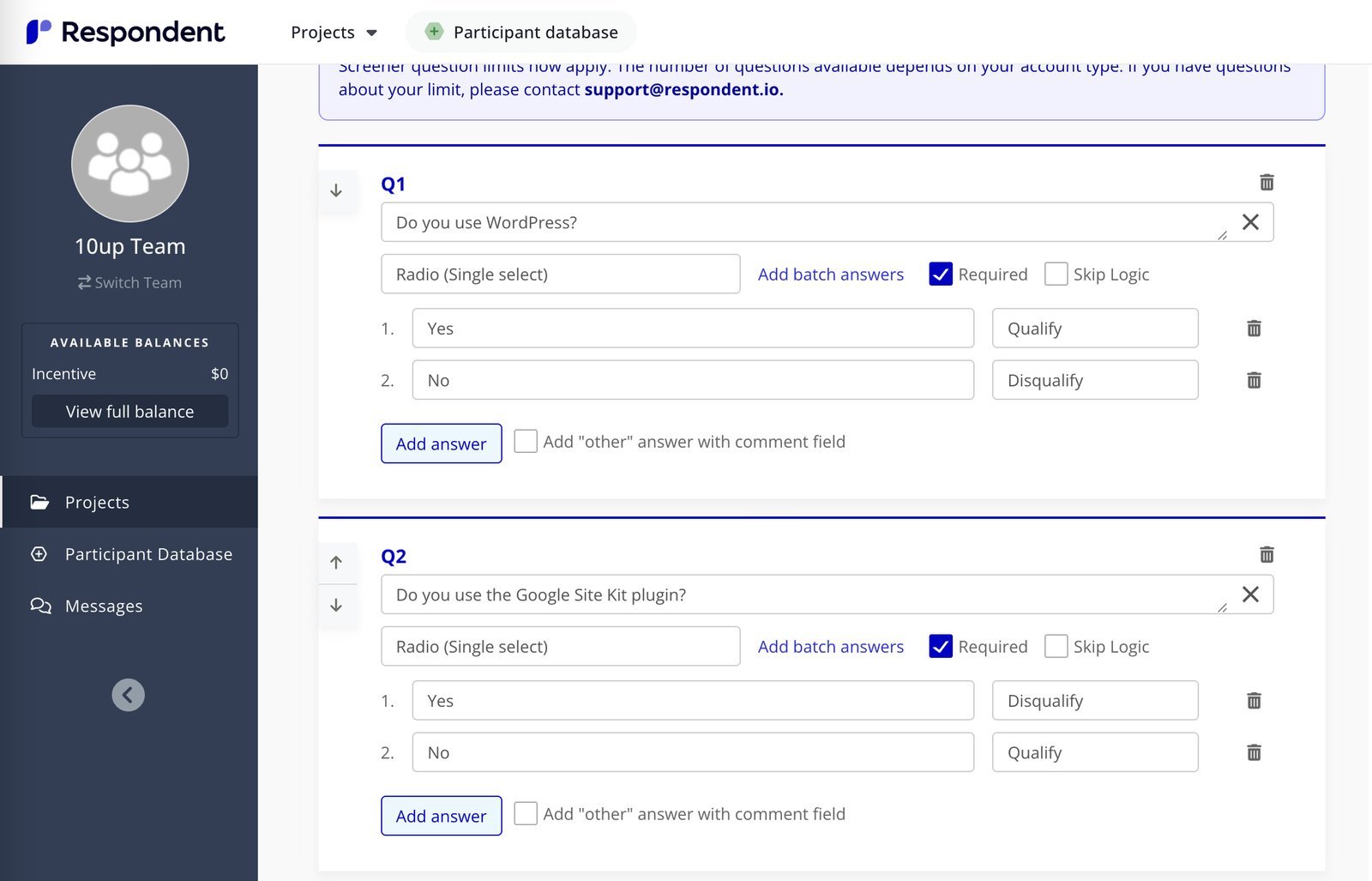
Recruiting fresh eyes
I recruited WordPress users who had not used Site Kit before. This choice was deliberate. We wanted fresh views from people with no existing knowledge of the plugin.
Understanding their world
In the interviews, I asked participants how they manage and monitor their site’s performance. I asked which Google tools they use, and what matters to them when they set up a new plugin.
These answers showed us their expectations before they saw any prototypes.
Testing two flows
I then showed participants two versions of a new onboarding flow:
Gamified. Badges rewarded users for connecting more Google products.
Linear. The flow guided users through setup one step at a time.
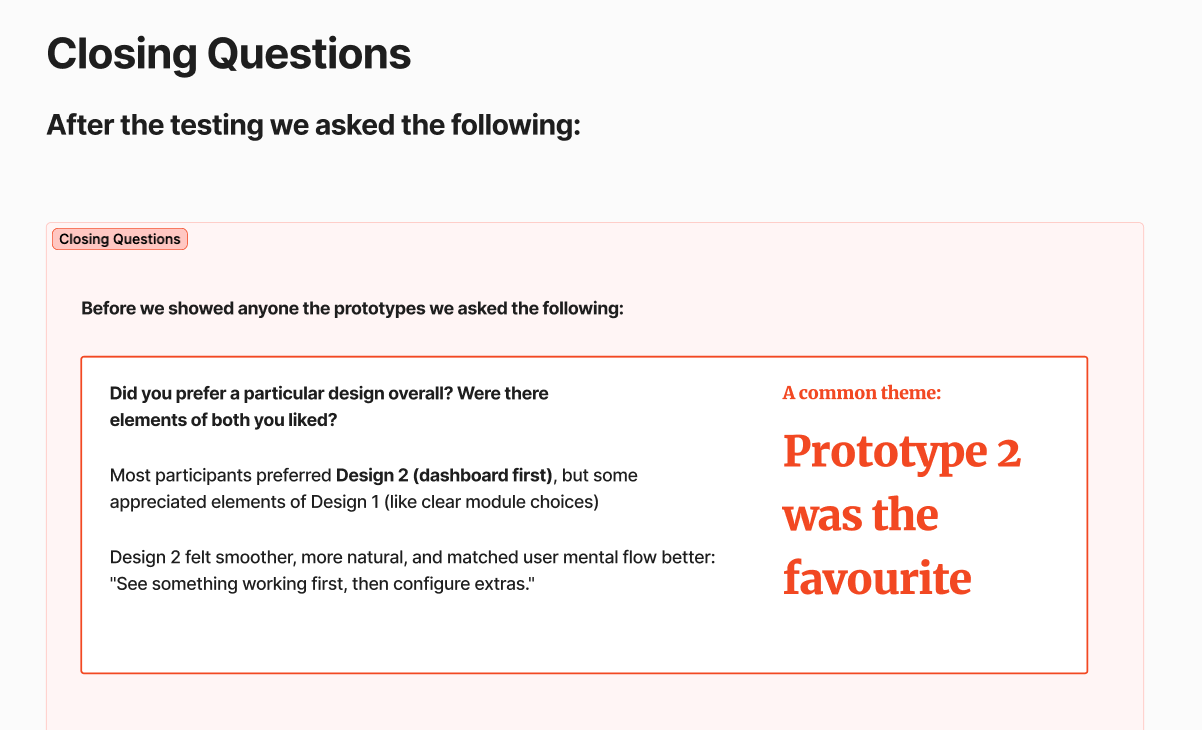
The response was unanimous. Participants found the badges gimmicky and frustrating. The linear flow felt clear and simple, and it matched how they expect plugin setup to work.
I want to see something working first, then configure extras later.
Synthesis
After the sessions, I grouped the findings into clear themes. I used ChatGPT to help with pattern analysis and reporting.
I then presented the results to the Site Kit team. The presentation showed what users said and explained why it mattered for the product direction.
03
The result
The team moved ahead with a simple, step-by-step setup, backed by clear user evidence.
Impact
The research gave the Site Kit team strong evidence that a linear onboarding flow was the right choice. Because user feedback backed the decision, the engineering team moved ahead with confidence.
They focused on a simpler setup that helps users connect more Google services without friction.
What I learned
This project showed me the value of testing assumptions early. Our assumption was that gamification would motivate users.
Putting prototypes in front of real people let us drop that approach quickly. We then focused on what users actually wanted: simplicity, clarity and speed.